EpisodesQuick 03
The Most Beautiful Move in Chess History
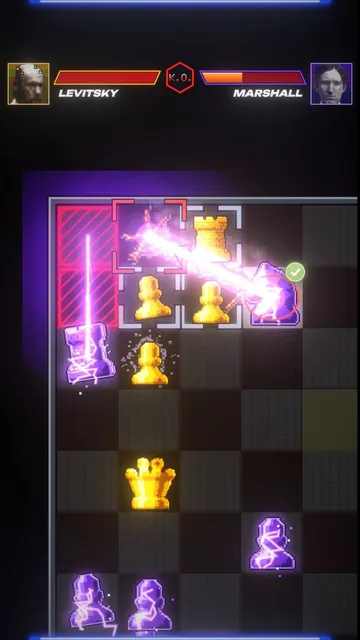
The queen lands on a square where three pieces can take it.
- White
- Stepan LevitskyRussian master, winner of the 1911 All-Russian Amateur Tournament. Age 36.
- Black
- Frank MarshallUS champion since 1909. Age 34.
- Event
- 18th Congress of the German Chess Federation, master tournament, round 6
- Place
- Breslau, Germany (now Wrocław, Poland)
- Date
- 20 July 1912
- Opening
- French Defense, Marshall Gambit (C10)
- Result
- 0-1White resigned, 23 moves
- Video
- 0:40Published 12 November 2026
The story
Breslau, 20 July 1912, round 6 of the master tournament at the German Chess Federation's congress. Frank Marshall, 34, has been champion of the United States since 1909. With Black he meets Stepan Levitsky, 36, a Russian master.
Marshall plays his own gambit in the French Defense, and for nineteen moves the game is level. Then Levitsky moves his queen to the wrong square: 20.Qh5 is the losing move. 20.Qe4 held.
The black rooks arrive. 21...Rh6 attacks the queen with the bishop on h3 standing behind it, and 22...Rxh3 takes the bishop. The pawn cannot take the rook back: a knight check on f3 would win the queen.
Then comes the move the game is known for. 23...Qg3 puts the black queen on a square where three white pieces can take it. If the h-pawn takes, the knight mates on e2. If the f-pawn takes, it is mate in two. If the queen takes, a knight fork leaves Black a piece ahead. And if nothing takes, the queen mates on h2. Levitsky resigned.
The story goes that the spectators showered the board with gold coins, and that is how the game got its name. Marshall himself told it that way thirty years later. The reports from 1912 say nothing about gold.
Key moments
Frames from the video, one for each turning point.
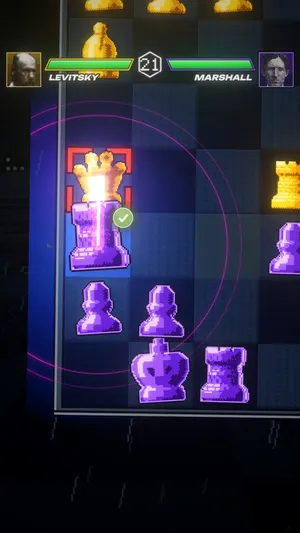
21...Rh6!
The rook lift
The rook attacks the queen, and the bishop on h3 stands right behind it.
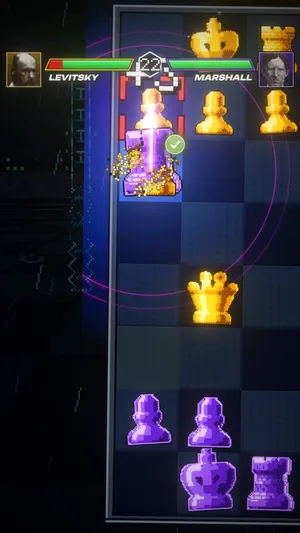
22...Rxh3!
The bishop falls
The pawn cannot take back: 23...Nf3+ would fork the king and the queen.
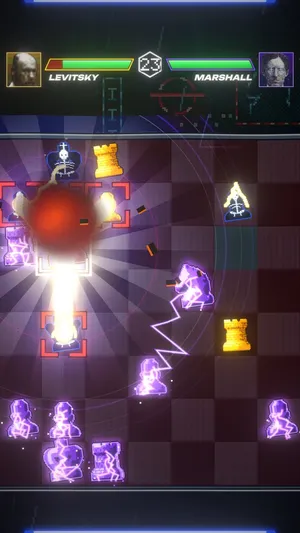
23...Qg3!!
The queen on g3
Three pieces can take it. Two of the captures are mated, the third loses a piece.
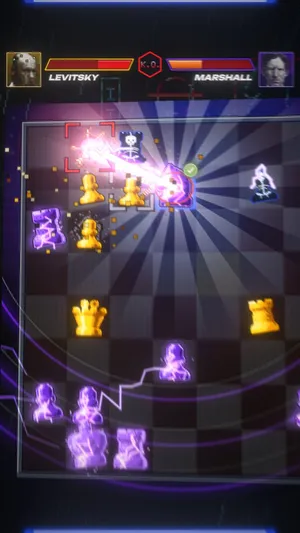
24.hxg3 Ne2#
Not played
The video goes on after the resignation: if the h-pawn takes the queen, the knight mates.
Command list
- 1.d4e6
- 2.e4d5
- 3.Nc3c5
- 4.Nf3Nc6
- 5.exd5exd5
- 6.Be2Nf6
- 7.O-OBe7
- 8.Bg5O-O
- 9.dxc5Be6
- 10.Nd4Bxc5
- 11.Nxe6fxe6
- 12.Bg4Qd6
- 13.Bh3Rae8
- 14.Qd2Bb4
- 15.Bxf6Rxf6
- 16.Rad1Qc5
- 17.Qe2Bxc3
- 18.bxc3Qxc3
- 19.Rxd5!Nd4!
- 20.Qh5?Ref8
- 21.Re5Rh6!
- 22.Qg5Rxh3!
- 23.Rc5Qg3!!
The PGN file
[Event "18th DSB Kongress, master tournament"]
[Site "Breslau GER"]
[Date "1912.07.20"]
[EventDate "1912.07.15"]
[Round "6"]
[White "Stefan Levitsky"]
[Black "Frank James Marshall"]
[Result "0-1"]
[ECO "C10"]
[Opening "French Defense: Marshall Gambit (by transposition)"]
[PlyCount "46"]
[Source "chessgames.com gid=1094915 (raw file in download/chessgames/); moves match Wikipedia, Levitsky versus Marshall"]

1.d4 e6 2.e4 d5 3.Nc3 c5 4.Nf3 Nc6 5.exd5 exd5 6.Be2 Nf6 7.O-O
Be7 8.Bg5 O-O 9.dxc5 Be6 10.Nd4 Bxc5 11.Nxe6 fxe6 12.Bg4 Qd6
13.Bh3 Rae8 14.Qd2 Bb4 15.Bxf6 Rxf6 16.Rad1 Qc5 17.Qe2 Bxc3
18.bxc3 Qxc3 19.Rxd5 Nd4 20.Qh5 Ref8 21.Re5 Rh6 22.Qg5 Rxh3
23.Rc5 Qg3 0-1
Behind the edit
What it took to turn 7 plies into 0:40 of video. Counted from the finished edit.
- Effects
- 294
- Kinds of effect
- 57
- Sound cues
- 11
- Moves, each with its own light
- 7
- Seconds of video
- 40
What we checked
Every caption in the video was checked against the sources. Some well-known stories did not survive.
The crowd showered the board with gold coins.
It is a legend with a real root. The 1912 reports and the tournament book do not mention gold. Marshall's own notes say a purse was presented to him; by 1942 his memoir had the spectators showering him with gold pieces. Another account, from 1978, says the coins were bets being paid by people who had backed Levitsky. The video shows no coins.
Levitsky was checkmated.
He resigned after 23...Qg3. The video plays one more line, 24.hxg3 Ne2 mate, to show why. It was not played, and it is not White's best reply: 24.Qxg3 avoids mate and leaves Black a knight ahead.
Every capture is mate.
Two of the three are. White had 41 legal replies to 23...Qg3: 40 of them lose to a forced mate, and only 24.Qxg3 does not.
The only winning move.
It was not. About half a dozen queen moves win at move 23. The engine puts 23...Qg3 narrowly first, and it is the most forcing. One writer has called it the most over-rated move in chess history for that reason; two well-known lists rank it first and third among the most amazing moves ever played.
Levitsky, champion of Russia.
Some sources call him that. What is certain is that he won the All-Russian Amateur Tournament in 1911 and earned the master title with it, so the card says only that.
Credits
- Photos: Stepan Levitsky (1913) and Frank Marshall (1908): public domain, via Wikimedia Commons.
- Music and voices: original.
Next fight
 Round 071-0 · CheckmateEd. Lasker vs Thomas · 1912The King ElevatorOne queen for one pawn, then eight checks in a row. The king walks from g8 all the way down to g1.Press start

 Quick 051-0 · CheckmateMorphy vs The Duke and the Count · 1858The Most Famous Checkmate in Chess HistoryA rook, then the queen. Morphy gives both away, and the last rook slides to d8.Press start
- Player 2Your gameSend the PGN of your best game. It might be the next fight, with your name on it.Insert coin