EpisodesRound 01
The Evergreen Game
A knight, a rook and the queen, all sacrificed. Mate while 12 points down.
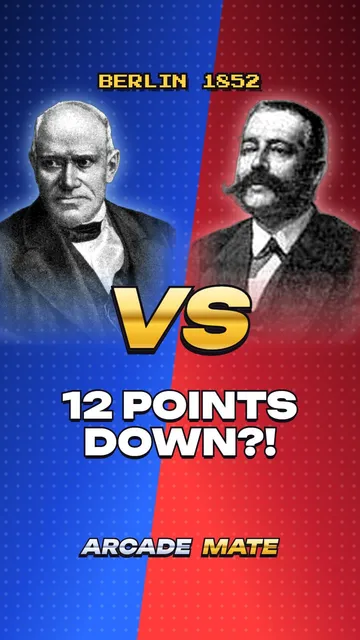
- White
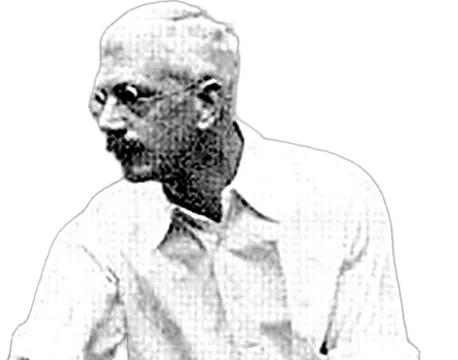
- Adolf AnderssenWinner of London 1851. Born 1818.
- Black
- Jean DufresneAnderssen's pupil and sparring partner. Born 1829.
- Event
- Casual game
- Place
- Berlin (by tradition)
- Date
- 1852
- Opening
- Evans Gambit Accepted (C52)
- Result
- 1-0Checkmate, 24 moves
- Video
- 1:44Published 4 November 2026
The story
Adolf Anderssen was the strongest player in the world, the winner of London 1851. Jean Dufresne was his pupil and his sparring partner in Berlin. In 1852 they sat down for a casual game, and nobody expected it to be analysed for the next 170 years.
Anderssen opens with his favourite weapon, the Evans Gambit: 4.b4 gives a pawn away to win time. A second pawn follows on move 6. Dufresne takes both and pushes a pawn to d3, a thorn in the middle of White's position.
On move 17 the sacrifices get bigger. 17.Nf6+ gives up a knight to open the e-file. Dufresne answers well: his rook takes the g-file, and his queen aims at g2. One more move and Black gives mate.
Here Anderssen plays the move that named the game. Instead of defending, 19.Rad1!! quietly puts a rook behind his own bishop. Wilhelm Steinitz called it "an evergreen in the laurel crown of the departed chess hero". Dufresne takes a second knight with 19...Qxf3 and threatens mate in one.
White can no longer stop. Every move from here must be a check, and every one is: the rook is sacrificed on e7, the queen on d7, the bishop gives a double check together with the hidden rook, and the other bishop mates on e7. Five checks in a row, with White 12 points of material down: 17 against 29.
The game is beautiful, not flawless. That is exactly why people still analyse it, and why it is called evergreen.
Key moments
Frames from the video, one for each turning point.
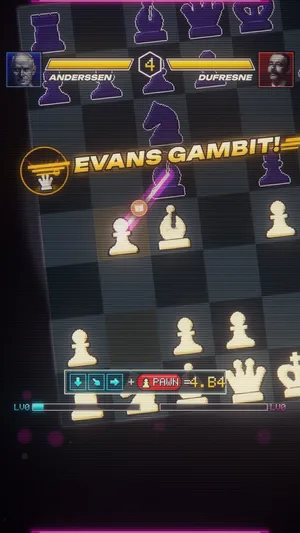
4.b4!
The gambit
A pawn for speed. Anderssen offers the b-pawn to pull the bishop away and win time for the centre.
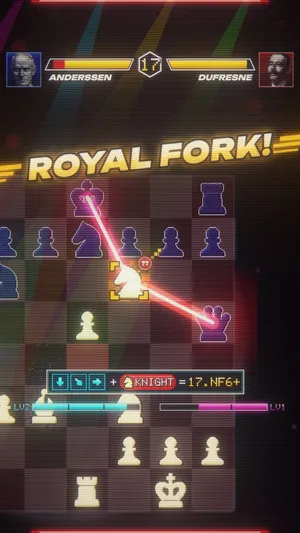
17.Nf6+!?
Knight sacrifice
The knight forks king and queen, and is taken. The price of an open e-file.

19.Rad1!!
The evergreen move
A quiet rook move in the middle of a mating race. The rook hides behind the d3-bishop, aimed at d7.

21.Qxd7+!!
Queen sacrifice
The queen lures the king onto d7, straight into the line of the hidden rook.

24.Bxe7#
Checkmate
The fifth check in a row. The bishop that waited on a3 since move 11 takes e7 with mate.
Command list
- 1.e4e5
- 2.Nf3Nc6
- 3.Bc4Bc5
- 4.b4!Bxb4
- 5.c3Ba5
- 6.d4exd4
- 7.O-Od3
- 8.Qb3Qf6
- 9.e5!Qg6
- 10.Re1Nge7
- 11.Ba3b5?!
- 12.Qxb5Rb8
- 13.Qa4Bb6
- 14.Nbd2Bb7?
- 15.Ne4Qf5?
- 16.Bxd3Qh5
- 17.Nf6+!?gxf6
- 18.exf6Rg8
- 19.Rad1!!Qxf3?
- 20.Rxe7+!Nxe7?
- 21.Qxd7+!!Kxd7
- 22.Bf5+Ke8
- 23.Bd7+Kf8
- 24.Bxe7#
The PGN file
[Event "Casual Game"]
[Site "Berlin GER (Kingdom of Prussia)"]
[Date "1852.??.??"]
[Round "?"]
[White "Adolf Anderssen"]
[Black "Jean Dufresne"]
[Result "1-0"]
[ECO "C52"]
[Opening "Evans Gambit"]
[PlyCount "47"]
[Source "Deutsche Schachzeitung, v7 n9, September 1852, pp338-339; ending v7 n10, October 1852, p383"]
[Annotator "Downloaded from chessgames.com gid=1018961 (moves 1-20); mate in 4 completed as in all modern sources"]

1.e4 e5 2.Nf3 Nc6 3.Bc4 Bc5 4.b4 Bxb4 5.c3 Ba5 6.d4 exd4 7.O-O d3 8.Qb3
Qf6 9.e5 Qg6 10.Re1 Nge7 11.Ba3 b5 12.Qxb5 Rb8 13.Qa4 Bb6 14.Nbd2 Bb7 15.Ne4
Qf5 16.Bxd3 Qh5 17.Nf6+ gxf6 18.exf6 Rg8 19.Rad1 Qxf3 20.Rxe7+ Nxe7
{The 1852 magazine stopped here: "White mates in 4 moves".} 21.Qxd7+ Kxd7
22.Bf5+ Ke8 23.Bd7+ Kf8 24.Bxe7# 1-0
Behind the edit
What it took to turn 47 plies into 1:44 of video. Counted from the finished edit.
- Effects
- 539
- Kinds of effect
- 84
- Sound cues
- 111
- Moves, each with its own light
- 47
- Seconds of video
- 104
What we checked
Every caption in the video was checked against the sources. Some well-known stories did not survive.
The famous knight sacrifice wins the game.
It does not. 17.Nf6+ turns a winning position into an equal one: 17.Ng3 kept the advantage. Black was still fine until 19...Qxf3, when 19...Qh3 or 19...Bd4 would have held a draw.
The whole game was printed in 1852.
The first publication (Deutsche Schachzeitung, September 1852) stops after 20...Nxe7 with the words "White mates in 4 moves". The mating line 21.Qxd7+ Kxd7 22.Bf5+ Ke8 23.Bd7+ Kf8 24.Bxe7# was printed in the next issue.
It was played in Berlin.
Berlin is the traditional venue, but the 1852 publication names none, and the day is unknown. That is why the video shows "BORN 1818" on Anderssen's card instead of an age.
12 points down.
Counted on the final position: White has 17 points of material, Black has 29.
Credits
- Photos: public domain (Wikimedia Commons). Anderssen: photo c. 1860, author unknown. Dufresne: engraving, author unknown.
- Music and voices: original.
Next fight
 Round 071-0 · CheckmateEd. Lasker vs Thomas · 1912The King ElevatorOne queen for one pawn, then eight checks in a row. The king walks from g8 all the way down to g1.Press start

 Quick 051-0 · CheckmateMorphy vs The Duke and the Count · 1858The Most Famous Checkmate in Chess HistoryA rook, then the queen. Morphy gives both away, and the last rook slides to d8.Press start
- Player 2Your gameSend the PGN of your best game. It might be the next fight, with your name on it.Insert coin